
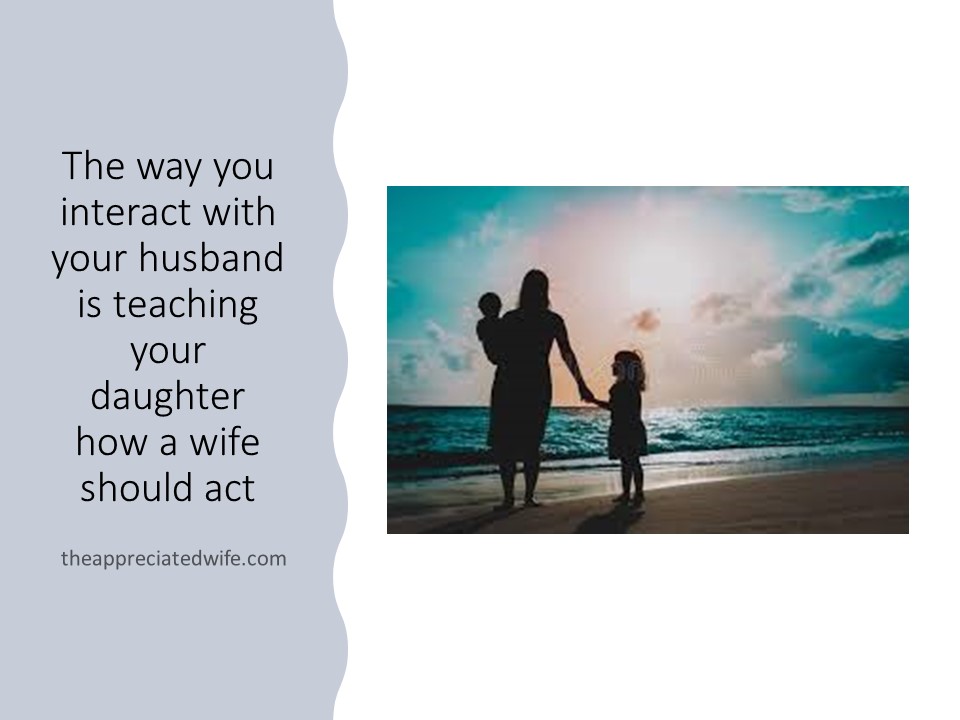
What legacy are you leaving?

Watching the news each night on television makes me shudder.  We learn of terrorist attacks, riots, murders, and plagues.  We watch towns leveled and lives taken by flooding, earthquakes and tornadoes.  Life on this earth is so short, and we never know when we will be living our last day in these bodies.  It causes me to reflect on the legacy I would leave if I were to be called home to be with Jesus today.  It is something for you to ponder too.  In what condition would you have left your marriage?  What would be your marriage legacy?  Would your children say they had an excellent role model for what a godly wife is supposed to look like?  Or would they say mom was cold and bitter toward dad or seemed to always point out something he had done wrong?

The Bible wisely instructs us “Do not let the sun go down while you are still angry…”  (Ephesians 4:26).   So, perhaps today is a good day to take inventory on your relationships.  Have you let anger and bitterness creep into the relationship with your husband, or your children, or other loved ones?  Do what you can to respectfully address the issues that have prompted bitterness or anger.  The Bible says in Romans 12:18, “If it is possible, as far as it depends on you, live at peace with everyone.”  So, do what you can today to make peace. Don’t wait until tomorrow.  I don’t mean to be theatrical, but truly, none of us has an ironclad guarantee of another sunrise.  Let’s leave a godly legacy for our children.  Let’s show our daughters how a wife can show respect and honor for her husband while at the same time refusing to put up with disrespectful or abusive behavior.
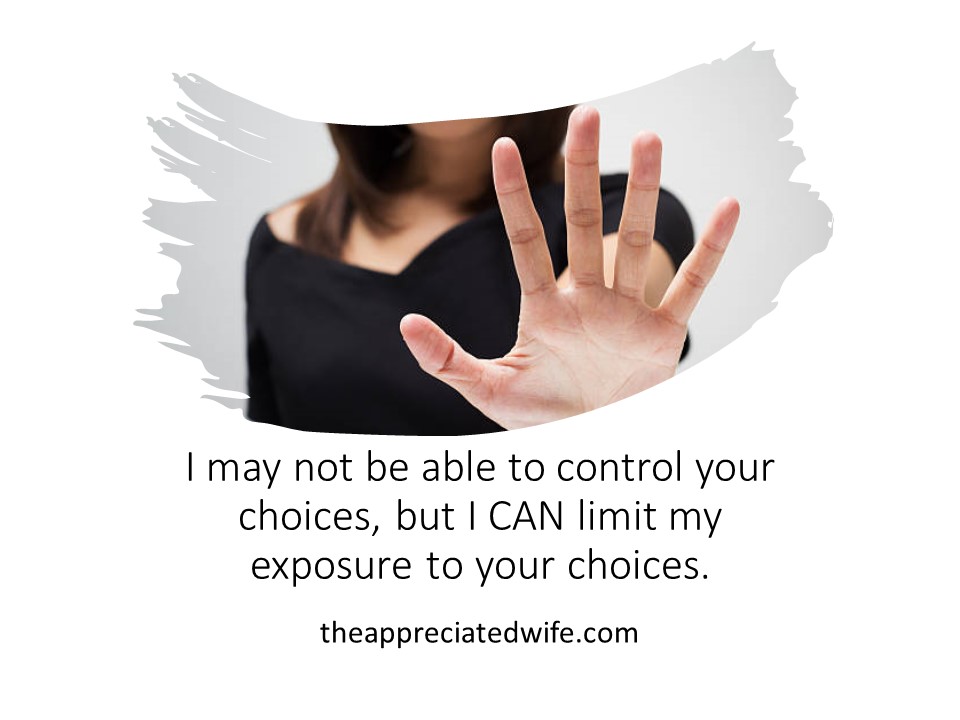
Examples of relationship boundaries

I get asked quite often about boundaries in relationships. The subject of boundaries is a topic tossed around a lot, and women sort of instinctively know they need boundaries in relationships, but they don’t exactly know the how, what, when and whys of healthy boundaries!

First let me explain that there is a difference between asking your boyfriend or husband to change and setting a boundary.  A boundary is not a request for the other person to change.  A boundary is deciding what YOU will do to protect yourself physically, emotionally or mentally from the other person’s harmful or destructive behavior.  A boundary basically says to that other person, “I can’t control your choices, but there are some things I CAN do to control how your choices affect me”.

Let me give some examples:

  • A husband refuses to stop looking at pornography and that choice wounds his wife’s heart.  She makes a request for him to stop (and most likely to seek serious help for that addiction), but she can’t MAKE him stop.  So, she establishes a boundary.  She tells him if she continues to catch him looking at porn, she will move to a separate bedroom or even separate from him entirely until he gets serious help for his problem.  That’s setting a boundary.
  • A husband is emotionally abusive and that wounds his wife.  She makes a request for him to stop, but she can’t MAKE him stop. So, she establishes a boundary.  She tells him if he screams obscenities at her or degrades her even one more time, she will immediately leave the room (or the house) because she won’t tolerate that kind of behavior.  If the emotional abuse continues, she might set an even larger boundary and tell him she will need to separate until he seeks serious help.  That’s setting a boundary.

By the way, boundaries are Biblical.  Here’s an example from Titus 3:10 Warn a divisive person once, and then warn them a second time. After that, have nothing to do with them.  And 1 Corinthians 5:11  I am writing to you that you must not associate with anyone who claims to be a brother or sister but is sexually immoral or greedy, an idolater or slanderer, a drunkard or swindler. Do not even eat with such people.

Courage to set boundaries

Have you ever caved in when you should have set boundaries in a relationship because of the “what if” questions?  What if he leaves me?  What if he leaves me and I won’t be able to take care of myself?  What if he gets really upset if I confront him?  What if….?

When you find yourself paralyzed with fear because of the “what if” questions, it usually means one of three things.  Either you don’t really trust God when he says in Hebrews 13:5 that he will “never leave you nor forsake you”.  Or it means you have allowed the spirit of fear to dominate your thoughts.  Or it could mean that you have become your own worst enemy and convinced yourself you’ll never be able to set boundaries and stick to them.  In other words, you’ve pummeled yourself with negative self-talk!

You CAN overcome these paralyzing fears.  How about choosing to trust God’s promise to never leave your side (Hebrews 13:5)?  Maybe it’s time to command the spirit of fear to leave you, in the name of Jesus (2 Timothy 1:7).  Perhaps you need to stop telling yourself that you’ll fall to pieces if you respectfully draw a firm boundary. Coach your soul just like King David did throughout the Psalms.  Tell yourself you will not crumble.  Remind yourself you will not fall apart.  Philippians 4:13 says “I can do all things through Him who gives me strength.”  With Jesus by your side, you have all you need.  You’re not doing this alone!