

Dealing with messed up people!

Aren’t “messed up” people annoying?  I’m sure you have a few in your life, perhaps your husband, an in-law, a coworker or even someone at church.  We shake our heads at these people, wondering why they can’t seem to get their act together.  We are disgusted by their sinful choices or behavior.  Sound familiar?

Unfortunately, as Christians, we can easily fall into this pattern of thinking.  We start to become self-righteous and judgmental.  We notice everyone else’s flaws and sin, but feel pretty good about ourselves.  But this is not how Jesus acted at all while he walked on this earth.  In fact, he was drawn to messed-up people!

Luke 5:29-32 Then Levi held a great banquet for Jesus at his house, and a large crowd of tax collectors and others were eating with them. 30 But the Pharisees and the teachers of the law who belonged to their sect complained to his disciples, “Why do you eat and drink with tax collectors and sinners?”  31 Jesus answered them, “It is not the healthy who need a doctor, but the sick. 32 I have not come to call the righteous, but sinners to repentance.”

Perhaps it’s time for you and me to stop judging others and looking down our noses at sinners, especially people we encounter at church.  In fact, if anyone we know (husband, in-law, coworker, neighbor) is actually attending church, we should be thrilled, not disgusted by their sin.  The fact that anyone walks into a church or Bible study is evidence that the Holy Spirit is working in the life of that person.  So instead of judging that person for failing to be perfect yet, perhaps we should encourage them and pray for them and give the Holy Spirit time to work.  That is what Jesus did.  Maybe we should do that too.
Forgiveness and boundaries

For anyone who has read the Bible’s New Testament, it’s hard to escape God’s frequent instruction for us to forgive others who have wounded or offended us in some way. A prime example is Ephesians 4:32, “Be kind and compassionate to one another, forgiving each other, just as in Christ God forgave you.” Yet, many women struggle with what forgiveness actually looks like if the person who hurt you continues to pose emotional, mental, or physical danger.


Please allow me to share what I’ve learned after spending time studying the Bible and also helping numerous women grapple with forgiveness. Here’s the big takeaway. You can and must forgive the other person in terms of letting justice rest in God’s hands and choosing to avoid the temptation to hope (or make) them suffer for what they did. However, forgiveness does not necessarily mean you need to be in a close relationship with that person or leave your heart wide open for further damage.


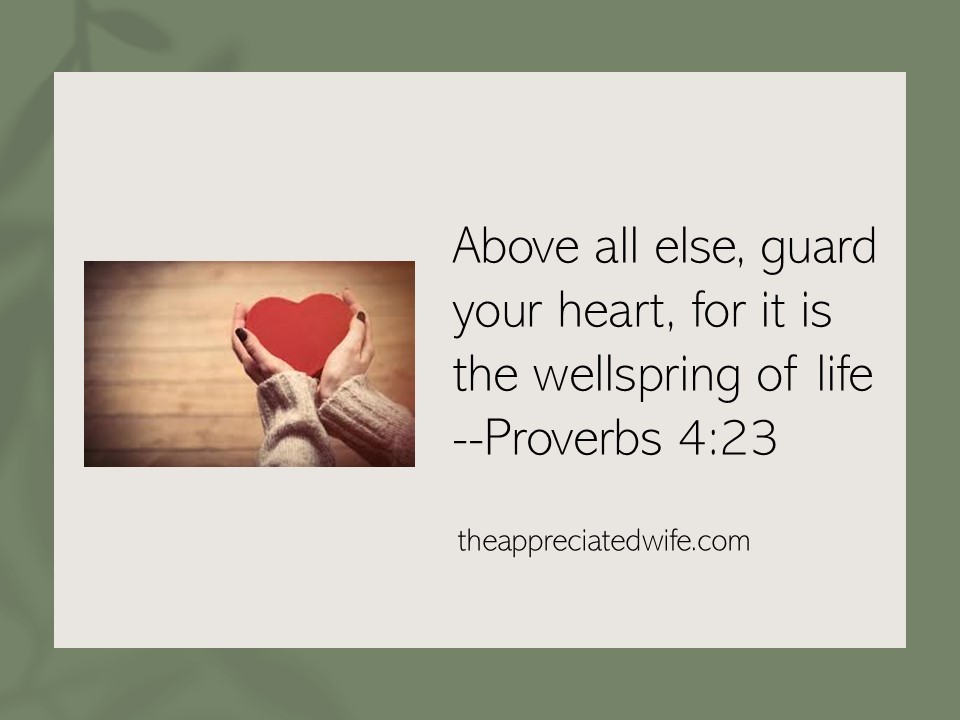
God gives a really pivotal instruction in Proverbs 4:23 where He says, “Above all else, guard your heart for it is the wellspring of life”. That’s where boundaries come in. If the person who deeply hurt you is still posing a significant danger to your emotional, mental or physical health, it’s appropriate to guard yourself by establishing a boundary in the relationship. This might mean a season of separation from that other person. This might mean keeping yourself distant until you see signs that this person may no longer be a danger to you, or that you have undergone sufficient healing from the Lord so that you are now strong enough to be around this other person.


Yes, we must forgive, but we must also be wise in terms of guarding ourselves from further harm.

** or view this topic as a 2 minute VIDEO BELOW