
Courage to set boundaries

Have you ever caved in when you should have set boundaries in a relationship because of the “what if” questions?  What if he leaves me?  What if he leaves me and I won’t be able to take care of myself?  What if he gets really upset if I confront him?  What if….?

When you find yourself paralyzed with fear because of the “what if” questions, it usually means one of three things.  Either you don’t really trust God when he says in Hebrews 13:5 that he will “never leave you nor forsake you”.  Or it means you have allowed the spirit of fear to dominate your thoughts.  Or it could mean that you have become your own worst enemy and convinced yourself you’ll never be able to set boundaries and stick to them.  In other words, you’ve pummeled yourself with negative self-talk!

You CAN overcome these paralyzing fears.  How about choosing to trust God’s promise to never leave your side (Hebrews 13:5)?  Maybe it’s time to command the spirit of fear to leave you, in the name of Jesus (2 Timothy 1:7).  Perhaps you need to stop telling yourself that you’ll fall to pieces if you respectfully draw a firm boundary. Coach your soul just like King David did throughout the Psalms.  Tell yourself you will not crumble.  Remind yourself you will not fall apart.  Philippians 4:13 says “I can do all things through Him who gives me strength.”  With Jesus by your side, you have all you need.  You’re not doing this alone!
Forgiveness and boundaries

For anyone who has read the Bible’s New Testament, it’s hard to escape God’s frequent instruction for us to forgive others who have wounded or offended us in some way. A prime example is Ephesians 4:32, “Be kind and compassionate to one another, forgiving each other, just as in Christ God forgave you.” Yet, many women struggle with what forgiveness actually looks like if the person who hurt you continues to pose emotional, mental, or physical danger.


Please allow me to share what I’ve learned after spending time studying the Bible and also helping numerous women grapple with forgiveness. Here’s the big takeaway. You can and must forgive the other person in terms of letting justice rest in God’s hands and choosing to avoid the temptation to hope (or make) them suffer for what they did. However, forgiveness does not necessarily mean you need to be in a close relationship with that person or leave your heart wide open for further damage.


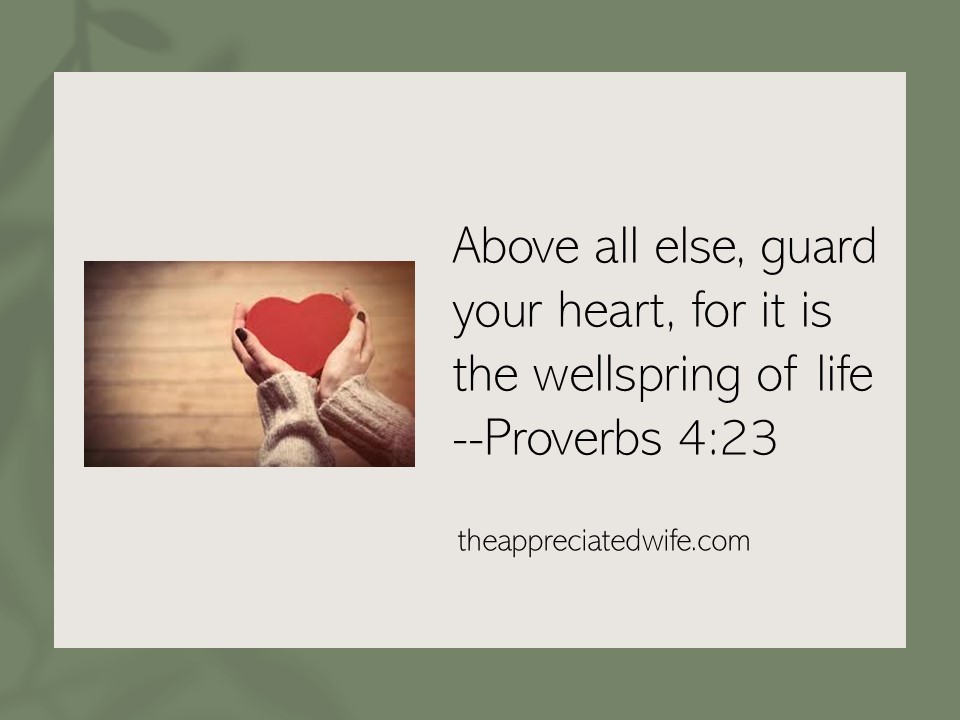
God gives a really pivotal instruction in Proverbs 4:23 where He says, “Above all else, guard your heart for it is the wellspring of life”. That’s where boundaries come in. If the person who deeply hurt you is still posing a significant danger to your emotional, mental or physical health, it’s appropriate to guard yourself by establishing a boundary in the relationship. This might mean a season of separation from that other person. This might mean keeping yourself distant until you see signs that this person may no longer be a danger to you, or that you have undergone sufficient healing from the Lord so that you are now strong enough to be around this other person.


Yes, we must forgive, but we must also be wise in terms of guarding ourselves from further harm.

** or view this topic as a 2 minute VIDEO BELOW